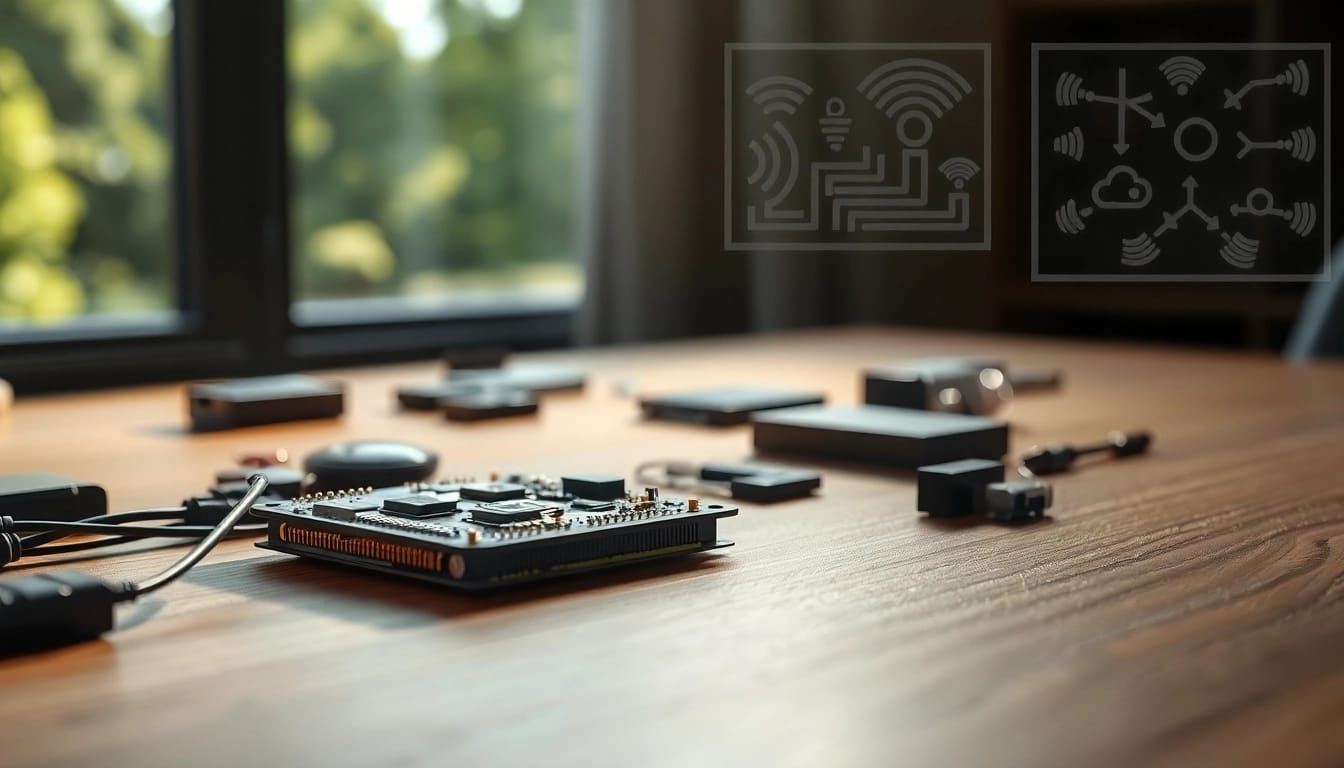
Understanding the LoRa Module
What is a LoRa Module?
The LoRa module, short for Long Range module, is a semiconductor device that enables low-power, wide-area network communication. It operates on small, low-power radio signals, making it an ideal choice for numerous applications that require long-distance connectivity while consuming minimal energy. With the rise of the Internet of Things (IoT), LoRa modules have emerged as a pivotal technology, facilitating the transmission of data over distances that can exceed several kilometers, depending on environmental conditions and infrastructure.
A specific feature that enhances the LoRa module's appeal is its ability to support various protocols, making it versatile for different applications. For a more in-depth exploration, visit the LoRa module section on our website.
Key Features and Specifications
LoRa modules come equipped with several features that set them apart from traditional wireless communication technologies:
- Long Range: Ability to transmit data over distances ranging from 2 to 15 kilometers in rural settings and approximately 5 kilometers in urban areas.
- Low Power Consumption: Designed for battery-operated devices, LoRa modules can function for years on a small battery due to their energy-efficient transmission protocols.
- Adaptive Data Rate: Adjusts the data rate dynamically based on the environmental condition and distance from the gateway, allowing optimal performance.
- Secure Communication: Incorporates advanced encryption techniques for secure data transmission, making it suitable for sensitive applications.
- Community Protocols: Works seamlessly on LoRaWAN (Long Range Wide Area Network) protocol, which is standardized for IoT applications.
How LoRa Modules Work
LoRa modules function based on chirp spread spectrum technology, which optimizes the bandwidth and enhances the signal-to-noise ratio. This enables the transmission of small packets of data over long distances. Here’s a simplified explanation of how they work:
- Signal Generation: The sender module encodes the data into chirp signals that are then transmitted.
- Transmission: These chirp signals travel through the air, overcoming various obstacles and interferences.
- Reception at Gateway: A nearby LoRa gateway receives the transmitted signals and decodes the chirps back into data.
- Data Forwarding: After decoding, the gateway forwards the data to the cloud or a central server for further processing.
Applications of LoRa Modules
LoRa Modules in IoT Devices
The integration of LoRa modules in IoT devices has revolutionized how smart devices communicate. From smart meters tracking energy consumption to wearable health monitors sending vital signs to healthcare providers, the applications are endless:
- Smart Metering: Utilities use LoRa-powered meters to monitor electricity, water, and gas usage remotely, leading to efficient resource management.
- Wearable Devices: Fitness trackers utilize LoRa technology to send data about physical activity and health metrics with low energy consumption.
- Smart Home Automation: Devices like smart thermostats and security systems utilize LoRa modules to remain connected to the home network efficiently.
Smart Agriculture Implementations
LoRa technology has made significant strides in transforming agricultural practices via smart farming solutions:
- Soil Monitoring: Sensors equipped with LoRa modules can monitor soil moisture, temperature, and nutrients, providing farmers with actionable insights to optimize irrigation.
- Livestock Tracking: RFID tags using LoRa enable farmers to track the location and health of livestock, contributing to more effective herd management.
- Crop Health Monitoring: Drones equipped with LoRa modules can collect data about crop health and transmit it back to farmers in real-time.
Urban Smart City Solutions
In urban settings, LoRa modules play a vital role in creating smarter cities. Examples include:
- Smart Parking: Sensors sense parking spot occupancy and communicate data to drivers, reducing congestion in urban areas.
- Environmental Monitoring: LoRa modules monitor air quality, noise levels, and other environmental factors to improve urban living conditions.
- Street Lighting Management: Smart street lights powered by LoRa technology can adjust their brightness based on pedestrian or vehicular traffic, leading to energy savings.
Installation and Setup of LoRa Modules
Essential Components Required
To successfully install LoRa modules in a project, a few essential components are needed:
- LoRa Module: The primary component that will be used to transmit and receive data.
- Gateway: A device that receives data from the LoRa module and forwards it to cloud storage or an application.
- Power Supply: Alongside the module, a proper power source, often battery or solar-powered, is necessary for long-term operations.
- Microcontroller: A device such as an Arduino or Raspberry Pi can be used to program the LoRa module for specific functionalities.
- Sensors: Depending on the application, various sensors (like temperature or humidity sensors) may be required to capture data.
Step-by-Step Installation Guide
Following a structured installation guide can make the setup process smooth and efficient:
- Prepare the Environment: Ensure that the installation site has a suitable location, considering factors like distance to the gateway and obstacles like buildings.
- Connect the Components: Wire the LoRa module to the microcontroller and any additional sensors according to the wiring schematic provided in the module's datasheet.
- Power Up: Connect the power supply and verify that the connections are secure.
- Program the Microcontroller: Upload the code that governs how the LoRa module communicates with other devices and the nature of the data it will send.
- Testing: Conduct a test to ensure that the data is being transmitted correctly to the gateway and ultimately to the cloud or application.
Troubleshooting Common Issues
Even with careful installation, issues can arise. Here are some common challenges and their solutions:
- Weak Signal: Ensure that the LoRa module is placed with a clear line of sight to the gateway. Adjust the antenna if necessary.
- Data Not Received: Verify the power supply, check the wiring and connections, and ensure the gateway is operational.
- Power Drain: If using battery-operated modules, ensure that they are programmed for low power modes during idle time to conserve energy.
Performance Metrics for LoRa Module Systems
Measuring Communication Range and Reliability
One of the most critical aspects of deploying LoRa technology is understanding its communication range and reliability metrics:
The effective range of a LoRa module can be influenced by several factors such as frequency, environment (urban vs. rural), and physical obstructions. Range tests should also consider the signal's reliability under various conditions, such as interference from other electronic devices or atmospheric conditions.
Data Transmission Speeds and Efficiency
LoRa modules typically operate at data rates from 0.3 kbps to 50 kbps, depending on the spread factor and bandwidth used. A critical component of their efficiency is the adaptive data rate feature:
- At longer distances, the data rate can be reduced to ensure robust communication.
- LoRa networks are optimized for sending small packets of information, which is ideal for sensor-based applications where only periodic updates are required.
Cost-Benefit Analysis
Conducting a cost-benefit analysis is crucial when considering the implementation of LoRa modules:
- Installation Costs: Initial costs include purchasing hardware (modules, gateways, sensors) and installation labor.
- Operational Savings: Over time, the low power consumption of LoRa modules leads to savings in energy costs.
- Maintenance: Unlike cellular technologies, LoRa modules require minimal maintenance, further lowering ongoing costs.
Future Trends in LoRa Technology
Emerging Applications and Innovations
The future of LoRa technology appears bright, with emerging applications transcending traditional boundaries:
- Smart Wearables: Integrating health tracking devices that not only monitor physical activity but also deliver real-time data to healthcare providers for preventive care.
- Wildlife Tracking: Conservation efforts will increasingly utilize LoRa modules to track endangered species in their habitats without disturbing them.
- Disaster Management: LoRa networks can be deployed rapidly in disaster-stricken areas to facilitate communication and coordination.
Predicted Market Growth and Demand
The demand for LoRa technology is expected to grow exponentially as more industries realize the benefits of low-power, long-range communication:
Market analysts predict that the LoRa market will witness a compound annual growth rate (CAGR) exceeding 25% over the next five years as IoT applications proliferate. High adoption rates in sectors such as agriculture, healthcare, and smart cities are fueling this expansion.
Integrating LoRa Modules with Other Technologies
The convergence of LoRa technology with other cutting-edge solutions will further enhance its capabilities:
- AI and Machine Learning: Analyzing the data transmitted via LoRa can lead to insights that improve decision-making processes in various fields.
- Blockchain Technology: Ensuring the authenticity of data collected from numerous sources, creating a transparent and secure data exchange.
- 5G Connectivity: Providing a robust backbone for LoRa communications, allowing for integrated solutions that benefit from both technologies.