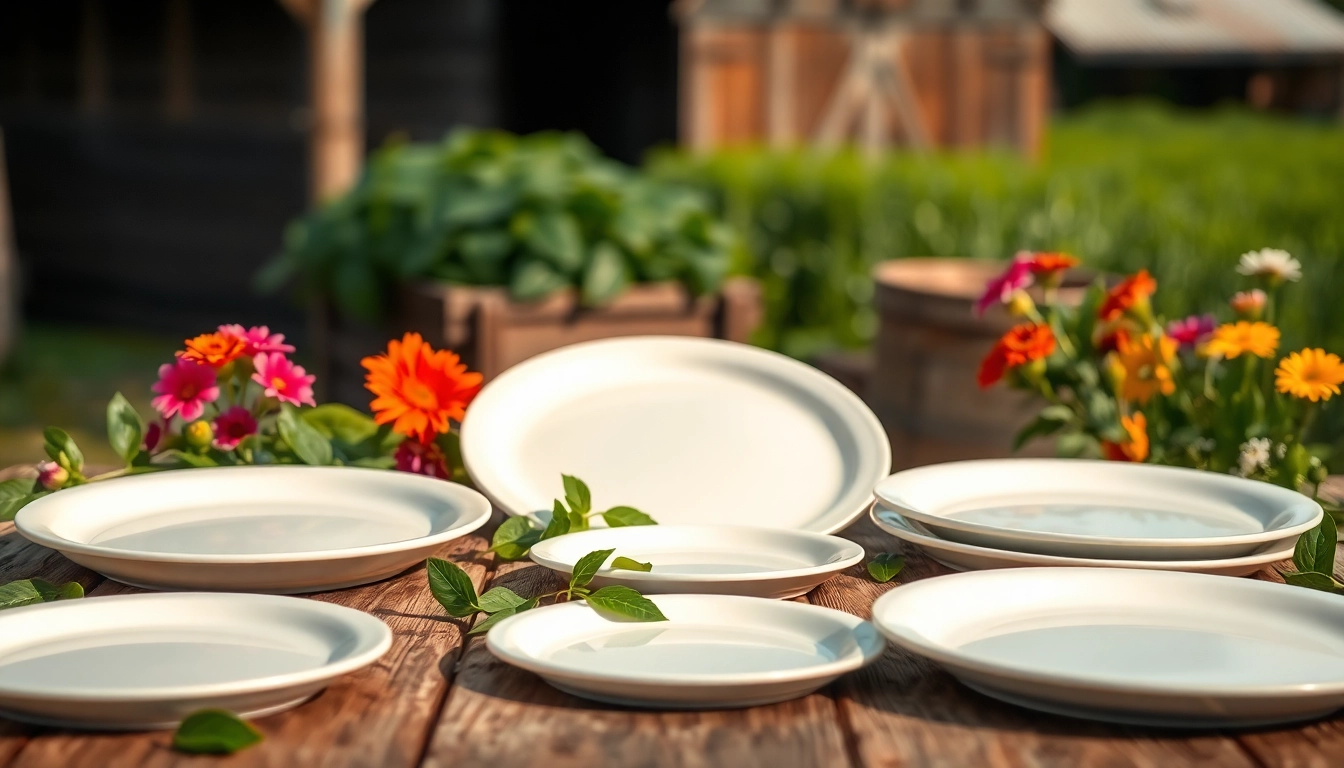
Understanding Compostable Plates
What Are Compostable Plates?
Compostable plates are eco-friendly alternatives designed for one-time use, offering consumers a solution to reduce plastic waste. Unlike traditional plastic or polystyrene plates, these plates are manufactured from renewable plant materials that break down naturally in composting environments. The primary objective of compostable plates is to minimize environmental impact by ensuring that they don’t contribute to landfill waste. By using compostable plates, individuals and businesses actively contribute to sustainable practices.
Materials Used in Compostable Plates
The materials used in compostable plates vary widely, promoting sustainability without sacrificing durability. Common components include:
- Sugarcane Bagasse: A byproduct of sugar production that is pulpable and sturdy.
- Bamboo: Fast-growing grass that is naturally compostable and often harvested sustainably.
- Wood Pulp: Converted into fibrous materials for structural stability.
- PLA (Polylactic Acid): A bioplastic derived from cornstarch, suitable for cold foods.
Each of these materials undergoes a specific manufacturing process to ensure that the final product is both functional and environmentally responsible.
Benefits of Using Compostable Plates
Using compostable plates offers several distinct advantages:
- Environmentally Friendly: Reduces reliance on petroleum-based products and supports a circular economy.
- Less Waste in Landfills: They decompose within a few months in a proper composting environment, unlike plastic that can take hundreds of years.
- Safe for Ecosystems: Many compostable plates do not release harmful chemicals when broken down.
- Convenience: They provide the ease of disposable tableware while remaining eco-conscious.
Choosing the Right Compostable Plates
Factors to Consider When Selecting Compostable Plates
When choosing compostable plates, consider the following factors to ensure you select the best option for your needs:
- Material Type: Different occasions may require different materials for optimal performance.
- Size: Ensure the plate size meets the requirements for your specific event or meal.
- Weight Capacity: Assess the sturdiness based on the types of food being served.
- Certification: Look for certifications indicating that the plates meet compostability standards.
Best Practices for Sizing and Usage
To maximize the effectiveness of compostable plates during events:
- Determine the portion sizes you plan to serve and select plates accordingly.
- Avoid using compostable plates for heavy and oily foods unless specifically designed for such.
- Consider combining small plates for appetizers with larger ones for main courses to provide versatility.
Comparing Different Types of Compostable Plates
There are various types of compostable plates tailored for different uses. Here’s a brief comparison:
TypeBest ForBenefitsSugarcane PlatesCatered EventsDurable and moisture-resistant.Bamboo PlatesFormal SettingsElegant look with sturdy design.PLA PlatesCultural FestivalsCompostable in industrial facilities.
Proper Disposal of Compostable Plates
How to Compost Compostable Plates
The composting process for these plates can significantly vary based on their materials:
- For sugarcane and bamboo plates, adding them to a backyard composting setup works well as they break down naturally.
- PLA plates often require commercial composting facilities that can maintain the necessary temperatures and conditions for breakdown.
Common Myths About Composting
Despite their benefits, misconceptions about compostable plates persist:
- All compostable items break down in home compost: Not all materials are suitable for at-home compost; some need specialized facilities.
- Compostable means biodegradable: Though related, not all biodegradable items can compost effectively.
- You can use plastic composting bins: Using conventional plastic bins is insufficient; ensure they support aerobic bacteria for effective composting.
Where to Find Local Composting Facilities
Finding composting facilities can be straightforward:
- Check local government websites for waste management and composting resources.
- Explore community gardening groups, which often have access to composting locations.
- Utilize online directories that map local composting services.
Compostable Plates in Events and Gatherings
Using Compostable Plates for Special Occasions
Whether hosting a birthday party, wedding, or festival, compostable plates can be tailored to fit the event’s theme:
- Select elegant bamboo plates for high-end engagements.
- Utilize colorful sugarcane plates for casual gatherings.
- Integrate branding into the design for corporate events.
Enhancing Sustainability at Events
Incorporating compostable plates is a part of a broader sustainable approach. Additional actions include:
- Encouraging guests to use composting bins on-site.
- Providing signage to educate attendees about using the plates responsibly.
- Pairing with additional compostable products like utensils and cups.
Combining Compostable Plates with Other Eco-Friendly Products
To further enhance sustainability:
- Pair compostable plates with biodegradable cutlery and cups.
- Consider using cloth napkins instead of paper for a complete eco-friendly setup.
- Use digital invitations to minimize paper waste.
The Future of Compostable Plates
Innovations in Compostable Materials
New technologies are emerging in the field of compostable materials. Innovations include:
- Development of multi-material plates that can combine the strengths of different materials.
- Refinements in manufacturing processes can lead to plates that are thinner yet as durable.
- Advanced biodegradability options that optimize the energy and resources used in their production.
Regulatory Trends Impacting Compostable Plates
Regulations surrounding compostable products are shaping the market:
- Increased demand for certifications and specifications outlining compostability.
- Policies encouraging the reduction of plastic waste may drive compostable plate adoption.
- Mandatory composting laws in some municipalities can promote usage among consumers and businesses alike.
Consumer Demand for Sustainable Options
As awareness of environmental issues rises, consumer preferences are shifting towards greener alternatives:
- More organizations are seeking partnerships with manufacturers to offer sustainable product lines.
- Shoppers are increasingly checking for compostable labels when selecting disposable items.
FAQs About Compostable Plates
1. Are compostable plates really compostable?
Yes, compostable plates made from natural materials like sugarcane, bamboo, and wood pulp are designed to break down in composting environments.
2. What’s the difference between compostable and biodegradable?
Compostable items break down into nutrient-rich compost within a specific timeframe, while biodegradable items may take longer and not necessarily contribute to soil health.
3. Can I use compostable plates for hot foods?
Many compostable plates are suitable for hot foods, but it's essential to check the manufacturer’s specifications to ensure they won’t warp or leak.
4. Where do I dispose of compostable plates?
Compostable plates can be disposed of in compost bins or dropped off at local composting facilities only if they are certified compostable and suitable for that method.
5. How long do compostable plates take to decompose?
Compostable plates typically break down within three to six months in a managed composting environment, depending on the materials used.